The Small Cue That Makes Practice Easier to Begin
A small cue can make practice easier to start by linking a brief session to something already in your day, without locking you into a rigid timetable.
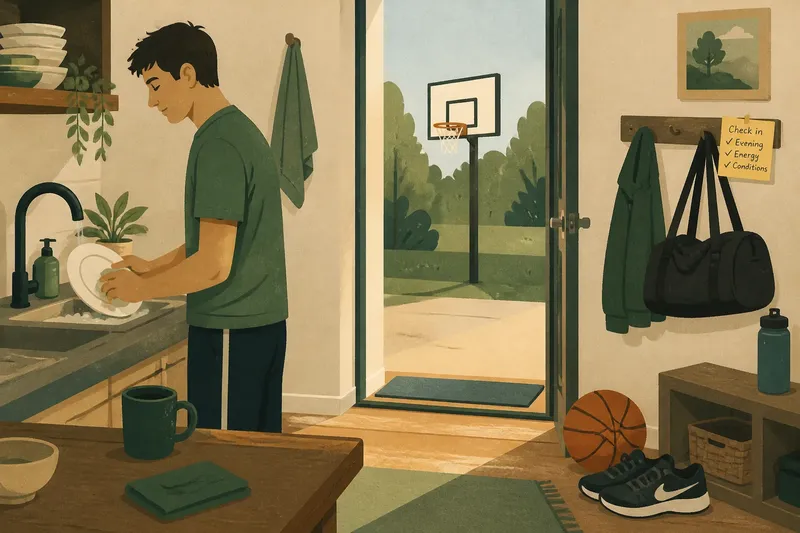
Your shoes are by the back door, your water bottle is still in the car, and the idea of practicing after work feels oddly large. A small cue for practice—such as putting away the lunch dishes or changing out of work clothes—can make the first move easier by linking it to an ordinary event. The useful question is not how to fit sport into every day, but which cue fits your routine without making practice feel like an appointment you can fail.
Why cues help
Starting practice often asks for several small decisions at once. What should you do? Where is your gear? Is there enough time to make the effort worthwhile? A familiar daily cue can shrink that opening stretch. It gives practice a recognizable place in the flow of the day, while leaving the session itself flexible.
A cue is an event you can notice, not necessarily a clock time. “After I clear the kitchen table” is anchored to something concrete. “At six o’clock” can be harder to keep if a bus runs late, a meeting drifts, or dinner needs attention. A clock-based plan may suit someone with a steady day, but an event-based cue often survives ordinary changes better.
The cue does not have to mean “train hard now.” It can mean “check in with the sport.” On one day that may lead to a short set of footwork drills; on another, it may reveal that rest is the sensible choice. The point is to make the beginning easier to approach, not to turn every opening into a demand.
Three cue styles
Attach practice to a transition
Transitions are moments when you are already moving from one part of the day to another: arriving home, changing clothes, finishing a meal, or closing a laptop. A practice cue attached to one of these moments can help because the action that follows is already underway.
This option suits people whose days have a recognizable hinge, even if the exact time shifts. Someone who changes into comfortable clothes after work might keep a resistance band or a ball where it is easy to see. The transition becomes a prompt to decide whether a brief session fits, not an order to complete a fixed workout.
Choose a transition that happens often enough to be familiar and is not usually followed by a rush. If getting home is chaotic, the quiet moment after putting away your bag may be a better anchor than the front door itself.
Attach practice to a place
A place can serve as a cue when you pass it naturally. The court on your walk home, a clear patch of floor near the laundry basket, or the park entrance beside the bus stop can remind you that practice is an option. This works especially well when the activity needs little setup and the location is genuinely convenient.
Place-based cues suit people who think in routes and surroundings. They can be less useful if reaching the location requires a separate trip or if the spot is often occupied. Keep the prompt simple: passing the park might mean a few minutes of easy running drills, while arriving at the community pool could prompt a check of the session schedule before you decide.
A place should invite practice, not make you feel trapped into it. If the cue depends on carrying several items or reorganizing the day, it may be more burden than help.
Attach practice to a recurring task
Some everyday tasks repeat in a dependable order: making tea, feeding a pet, or putting a phone on charge for the evening. A brief practice session can follow one of these tasks, especially when it does not interfere with anyone else’s needs.
This style suits people who prefer a clear sequence to a specific hour. It can also make a tiny session feel complete: after the kettle clicks off, spend a few minutes shadowing a tennis serve without a racket, or rehearse a balance drill in a clear space. Avoid choosing a task that is easily skipped or one that already marks the start of a crowded stretch.
Choose a workable cue
The best cue is specific, visible in your actual day, and close to an activity you can begin without elaborate preparation. It should also leave room for a changing schedule. Before settling on one, check these details and let each result guide your choice:
- Reliability: Check whether the event happens on an ordinary day. If it does, use it as a cue; if it often disappears, choose a more dependable event instead.
- Visibility: Check whether you can identify the moment clearly. If “put my lunch container in the sink” is easy to notice, keep it; if “find a spare moment” is too vague, name a specific event instead.
- First action: Check whether you know what to do next. If setting out a ball or opening a training log is clear, use that action; if the next move is uncertain, choose a simpler one.
- Preparation: Check whether the needed gear is easy to reach. If it is ready, proceed with the cue; if finding it becomes a project, simplify the setup or choose a different activity.
- Time and energy: Check whether the cue arrives during a workable part of the day. If a short session fits, begin; if the moment is crowded or you are depleted, shift the cue or leave practice for another day.
- Choice: Check whether the cue leaves room for fatigue, weather, family plans, or injury. If it prompts a genuine decision, keep it; if it feels like a penalty for stopping, replace it with a less demanding cue.
Say you want to practice basketball but often put it off after dinner. Imagine, hypothetically, that you choose washing your plate as the cue, keep a ball by the door, and decide that the first action is to check the evening and your energy. After clearing the plate, you look outside and find the yard dry and the evening unhurried, so you take the ball out and try relaxed dribbling patterns; the observable result is a clear start to practice. If the yard is wet or you feel worn out, you leave the ball where it is and keep the rest of the evening free. The same cue leads to a different decision because the conditions differ.
Keep the start small
A cue works best when the first action is modest enough to begin without a negotiation. “Do a full workout” asks you to commit to an entire session before you have moved. “Put on your court shoes and see how you feel” lowers that first hurdle. The session may grow, but it does not need to.
Make the opening action specific to your sport. A swimmer might check the pool bag and decide whether a swim fits the day. A runner might step outside for an easy warm-up. A climber might review a few movement notes or do gentle, familiar mobility before deciding whether a visit to the gym is practical. Keep any physical activity within your abilities and follow appropriate coaching or professional advice where injury, health conditions, or safety concerns are involved.
Preparation can help, but it should not become a miniature project. Leave a ball in a sensible spot, keep a notebook beside your kit, or put a clean shirt where you will see it. If setting up the cue takes more effort than beginning the practice, simplify it.
Allow different responses
A routine can make room for different kinds of days without turning practice into a test of willpower. Before the cue arrives, decide what options make sense for your sport and circumstances: a complete session when time and energy allow, a short practice on a crowded day, or rest when that is the sensible choice.
A small session should feel complete on its own, not like a debt to repay later. That might mean juggling for a little while, making a short series of gentle passes against a wall, or walking a familiar route. Pick an option suited to your current condition rather than treating a shorter practice as an inferior version of a full workout.
If the cue repeatedly arrives at an inconvenient moment, change the cue rather than blaming your discipline. If the first action keeps expanding until it feels daunting, make it simpler. A routine should fit the life you have, not demand that you defend it as a rule.
Choose by daily rhythm
If your day turns around a clear transition, attach practice to that hinge. If you pass a convenient, suitable place naturally, a location cue may feel more effortless. If you like familiar sequences, connect practice to a recurring task. These options can overlap, but begin with one so you can tell whether it fits your day.
After trying the cue in your routine, pay attention to what happens at the beginning: Is the prompt easy to spot? Can you start without hunting for equipment? Does it feel like a useful reminder rather than a deadline? If the cue is hard to notice, make it more specific; if it arrives at a bad time, choose a different event; if getting ready takes too long, move the gear or simplify the first action.
Questions about practice cues?
What makes a good practice cue?
A good cue is an ordinary event you can recognize, followed by a practical first action. It should fit your real schedule and leave you room to choose whether practice makes sense that day.
Should practice happen at the same time every day?
Not necessarily. A time can be useful if your day is predictable, while an event such as arriving home or finishing lunch can be easier to keep when the clock shifts.
What if I miss the cue?
Let the moment pass without treating it as a broken promise. If missing it becomes common, choose a cue that occurs more reliably or has a calmer stretch of day after it.
How long should the session be?
Make the opening small enough that starting feels manageable, then let the day and your condition guide what follows. A brief session can stand on its own; it does not have to grow into a full workout to count as practice.
Keep your small cue for practice tied to a moment you can actually recognize, and make the first action easy to reach. A ball by the door or a clear patch of floor can help; so can deciding in advance that rest remains an option when your body or circumstances call for it.