A First Team Session, Planned Around One Clear Aim
A first team session feels easier to follow when you choose one aim, learn how the group communicates, and leave with a useful note for next time.
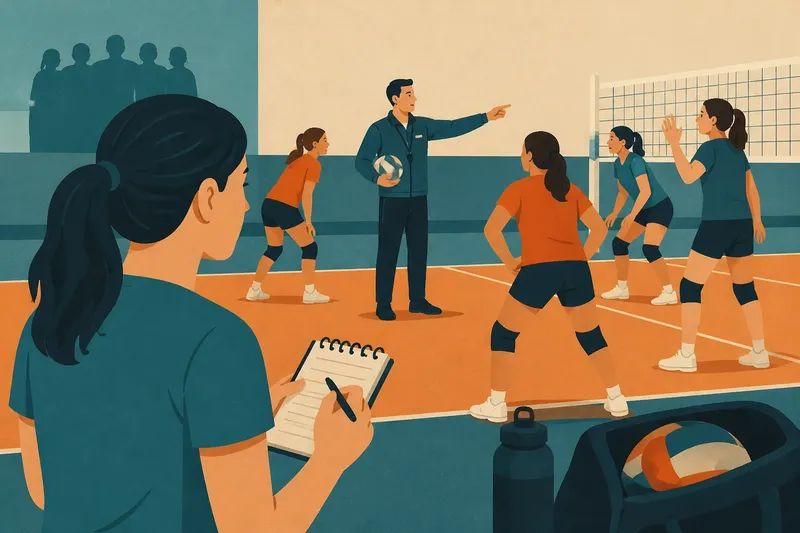
Your first team session is underway: players are moving between drills, the coach is calling instructions, and you are trying to keep track of what happens next. Rather than treating the evening as a test of your ability to fit in, choose one small detail about the team’s shared routines to notice.
This approach keeps the focus on team life: how people communicate, make room for one another, and coordinate a session. You are there to take part, but you do not need to understand every custom at once.
Notice the shared rhythm
Choose one observable feature of how the group operates. You might pay attention to how players form teams, how the coach signals a change, or what teammates do after a drill ends. These details reveal how the session is organized without requiring you to judge your own performance.
Keep the focus flexible. If the coach changes the plan, notice how the group responds instead of trying to steer the evening back to your original question.
Pick one group routine to watch, and let the rest unfold.
Read the group cues
Team routines often appear in small gestures: a player points to an open space, someone repeats an instruction for a teammate, or the group gathers when the coach raises a hand. Watch for these cues, then follow them when you understand what they mean.
If a cue is unclear, pause when it is safe and ask what action comes next. You do not need to imitate a movement whose purpose you cannot identify, especially if it could affect your safety.
- Check whether players form pairs or groups before a drill; if the pattern is clear, join the open group, but if it is not, ask where you should go.
- Check what the coach does before changing exercises; if the signal is clear, follow it, but if you miss it, wait for a pause and ask what is next.
- Check how players indicate they are ready to receive a pass; if you recognize the cue, respond when appropriate, but if you do not, watch a turn and clarify before joining that action.
- Check whether teammates repeat or demonstrate instructions; if their version matches the coach’s direction, use it to follow along, but if the directions conflict, check with the coach.
- Check where players return equipment after a drill; if a shared spot is obvious, put equipment there, but if it is not, ask before moving anything.
- Check how the group regathers after water or a break; if players are returning to a marked area, rejoin them, but if the destination is unclear, confirm it with a teammate or coach.
These are observations, not rules about how every team should behave. A group’s customs can vary by sport, coach, and session.
Ask about team routines
A useful question is brief and tied to an immediate decision: where to join, how a rotation works, or where to return shared gear. Listen to the coach’s explanation first; if the answer is still unclear, ask at a natural pause rather than interrupting play.
Imagine you join a recreational volleyball practice and the coach demonstrates a serving drill. Your starting point is that you do not know where to stand after serving. You watch one turn, then ask, “After I serve, where should I go?” The coach points to the back of the line, so you move there after your turn; the observable result is that you know where to wait when the next player serves. If the demonstration had already shown the route clearly, you could follow it without asking.
Build a team picture?
How do I learn a team's signals?
Watch for repeated gestures or calls that accompany the same group action. If you cannot tell what a signal means, ask the coach before acting on it.
What if teammates already know each other?
Join the activity when invited and respond to simple openings, such as a teammate making space for you. You can learn names and routines gradually rather than trying to meet everyone at once.
How can I handle conflicting instructions?
Pause if it is safe, then ask the coach which direction to follow. Do not guess when the difference affects what you should do or where you should move.
What should I remember afterward?
Write down one team routine you understood and one that remains unclear. That gives you a specific starting point for your next session without turning the evening into a scorecard.
Carry one observation
After practice, note a concrete detail about the group: perhaps the coach names the next drill before players move, or teammates return balls to a shared basket. A useful first team session note describes what happened, not what you think it says about your ability.
For your next first team session, bring that observation forward and watch for one new detail. The main phrase, “first team session,” need not mean a perfect performance; it can simply mark the start of learning how this particular group works.